Table of Contents
ToggleLanguage learning trends 2026 will reshape how millions of people acquire new skills. The industry continues to grow, with projections estimating the global language learning market will reach $115 billion by 2026. Technology advances faster than ever, and learner expectations shift alongside it.
This year brings significant changes. Artificial intelligence becomes more sophisticated. Virtual reality headsets become more affordable. Mobile apps get smarter about how people actually learn. Meanwhile, social connections prove just as valuable as any algorithm.
Here’s what language learners and educators should expect in 2026.
Key Takeaways
- AI-powered personalization is the leading language learning trend in 2026, adapting lessons in real time based on individual learner performance.
- Affordable VR and AR tools now let learners practice speaking in immersive, low-stakes environments that build confidence faster than traditional methods.
- Microlearning dominates busy schedules—short lessons under five minutes deliver better long-term retention than marathon study sessions.
- Demand for less commonly taught languages like Korean, Japanese, and Arabic is surging, driven by pop culture, business opportunities, and heritage connections.
- Community-based learning through language exchanges, Discord servers, and local meetups keeps learners motivated and consistent.
- The most effective language learning trends 2026 combine AI efficiency, immersive technology, and human connection for well-rounded skill development.
AI-Powered Personalized Learning Takes Center Stage
Artificial intelligence now drives the most significant language learning trends 2026 will bring. Apps and platforms use machine learning to analyze learner behavior in real time. They adjust lesson difficulty, vocabulary selection, and practice frequency based on individual performance.
This matters because traditional one-size-fits-all curricula waste time. A learner who struggles with verb conjugations doesn’t need extra vocabulary drills. AI systems recognize these patterns and respond accordingly.
Several developments stand out:
- Adaptive speech recognition corrects pronunciation with native-speaker accuracy
- Predictive algorithms identify which words a learner will likely forget and schedule timely reviews
- AI tutors hold natural conversations and provide instant feedback on grammar and usage
Companies like Duolingo, Babbel, and newer startups invest heavily in these technologies. The result? Learners spend less time on content they’ve already mastered. They focus energy where it counts.
Critics worry about over-reliance on algorithms. Human teachers bring cultural context and emotional intelligence that machines can’t replicate. The best language learning trends 2026 platforms will combine both, AI efficiency with human connection.
Immersive Technologies Reshape Language Practice
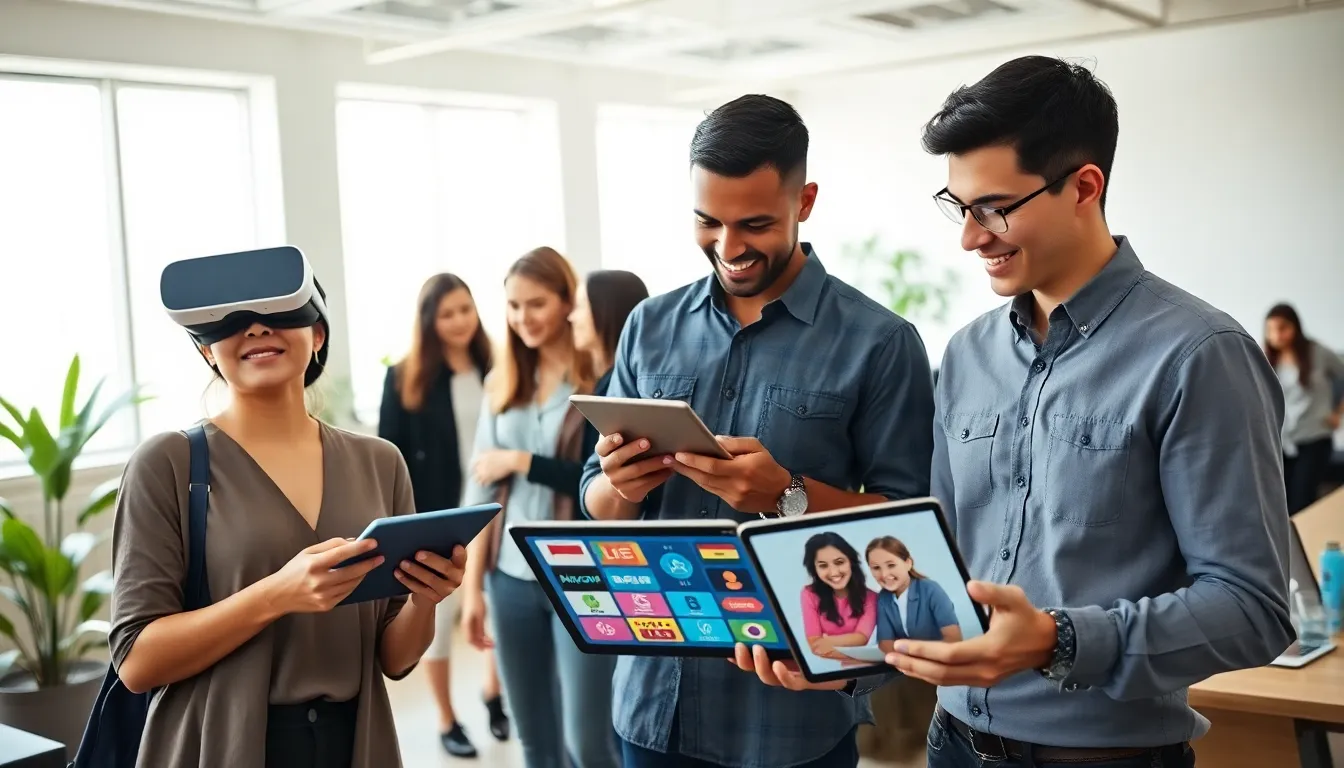
Virtual reality and augmented reality change language practice from abstract memorization to lived experience. Learners now order coffee in a Parisian café, negotiate prices in a Tokyo market, or chat with virtual roommates in a Barcelona apartment.
The hardware finally catches up with the vision. VR headsets cost less than $300 in 2026. Smartphone AR apps require no extra equipment at all. This accessibility opens immersive learning to mainstream audiences.
Immersive technology addresses a fundamental problem: most learners lack opportunities to use their target language in authentic situations. They study grammar rules but freeze in real conversations. VR environments create low-stakes practice spaces where mistakes carry no social consequences.
Language learning trends 2026 show particular growth in:
- VR conversation simulations with AI-powered characters
- AR vocabulary overlays that label objects in learners’ own homes
- 360-degree video tours of cities where the target language is spoken
Early research suggests immersive practice improves speaking confidence faster than traditional methods. Learners who practice in VR report lower anxiety when they eventually speak with real people.
The technology isn’t perfect. Some users experience motion sickness. Others find virtual interactions feel hollow compared to genuine human contact. But as a supplement to traditional study, immersive tools earn their place.
The Rise of Microlearning and Bite-Sized Content
Attention spans haven’t shrunk, schedules have. Modern learners juggle work, family, and countless digital distractions. Long study sessions become unrealistic for most people.
Microlearning responds to this reality. Lessons last five minutes or less. Content arrives in small, digestible chunks. Learners complete quick exercises during commutes, lunch breaks, or waiting rooms.
Language learning trends 2026 favor platforms that respect user time. The most popular apps offer:
- Daily challenges that take under three minutes
- Short-form video lessons optimized for mobile screens
- Spaced repetition flashcards that require just moments per session
Research supports this approach. Studies show frequent short sessions build stronger long-term retention than occasional marathon study blocks. The brain consolidates information better when learning spreads across multiple days.
Content creators adapt their formats accordingly. Language influencers on TikTok and Instagram deliver grammar tips in 60-second clips. Podcast episodes shrink from 45 minutes to 10. Even traditional textbook publishers release companion apps with micro-lessons.
The risk? Microlearning works best for vocabulary and simple grammar. Complex concepts like sentence structure or cultural nuance still require deeper engagement. Smart learners mix bite-sized content with longer study periods.
Growing Demand for Less Commonly Taught Languages
Spanish, French, and Mandarin remain popular choices. But language learning trends 2026 reveal growing interest in languages once considered niche.
Korean leads this wave. K-pop, Korean dramas, and Korean cinema drive millions of fans to study the language. Duolingo reports Korean as one of its fastest-growing courses globally.
Other languages gaining traction include:
- Japanese (fueled by anime and gaming culture)
- Arabic (business opportunities and heritage learners)
- Portuguese (Brazil’s growing economic influence)
- Hindi (India’s expanding tech sector and diaspora communities)
- Ukrainian (geopolitical awareness and solidarity)
This shift creates challenges. Quality resources for less commonly taught languages remain scarce compared to major European languages. Native speaker tutors charge premium rates due to limited supply. AI tools trained on smaller datasets perform less accurately.
Yet demand continues rising. Employers value candidates who speak languages their competitors overlook. Travelers seek authentic experiences beyond tourist zones. Heritage speakers reconnect with family roots.
Platforms respond by expanding their language offerings. Universities add new programs. Independent creators fill gaps with YouTube channels and community courses. Language learning trends 2026 prove that learner interests extend far beyond the usual suspects.
Community-Based and Social Learning Gains Momentum
Technology enables incredible solo study. But humans remain social creatures. Language learning trends 2026 show renewed emphasis on community connections.
Language exchange platforms match learners worldwide. Someone studying Japanese in Chicago connects with someone studying English in Osaka. Both practice their target languages through video calls. Neither pays tuition fees.
Popular community features include:
- Group challenges where learners compete on weekly leaderboards
- Discord servers organized by target language and proficiency level
- Virtual conversation clubs with structured discussion topics
- Tandem partnerships pairing native speakers for mutual benefit
Social accountability drives consistency. Learners who join communities maintain study habits longer than those who work alone. The social pressure of letting down a language partner proves surprisingly motivating.
Local meetups also rebound after pandemic-era declines. Coffee shop conversation groups, library study circles, and cultural centers host in-person gatherings. Some learners prefer the energy of face-to-face interaction over digital alternatives.
Language learning trends 2026 balance technological innovation with fundamental human needs. AI personalizes the curriculum. VR simulates immersion. Microlearning fits busy schedules. But community provides the motivation to keep showing up.